
During a recent free and easy trip to Japan, I had an opportunity to spend a couple of days in Hirosaki (弘前市), a regional centre with a population of around 180,000, located in the Aomori prefecture, the largest apple producing prefecture in Japan.

Aomori has more than 21,000 hectares of farming land for apple cultivation. The prefecture produces more than 50% of the apples in Japan, the main varieties being “Fuji”, “Tsugara” and “Jonagold”.
One would wonder why is Aomori so famous for its apples. There are various reasons for this. Firstly, the cool climate and the temperature differences are perfect for growing apples. The apples get the sun in the day, and store sugar in the night, and this repeating cycle produces the sweet characteristic of Aomori’s apples.
Secondly, the farmers are experienced, hard-working and employ specialized cultivation technics. Apple farming is a very manual and labour intensive process. The farmers here are dedicated and spend huge amounts of time maintaining the apple trees, for example, pruning the trees to ensure that sunlight can reach the apples. The farmers start the trimming process as early as January, during the winter season, to tune each tree for optimal sunlight.
Third, from an infrastructure perspective, there are specialized storage warehouses for the apple farming community. These facilities allow farmers to keep the apples under optimal conditions as they ripen and get shipped out for consumption.
But most importantly, the farmers are very passionate about their apples. Hence we get sweeter, bigger, juicy, crispy and delicious looking apples from Aomori.
Hirosaki Apple Park
There are quite many apple farms within Aomori. If you are in the Hirosaki area, the Hirosaki Apple Park (弘前市りんご公園, Tel: 0172-36-7439) is a great place to visit and it’s quite convenient to get to. If you are in the Hirosaki city area, it’s a short 15min drive to the park. Entry to the park is free. If you are on a self drive trip, free parking is also available at the entrance to the park.
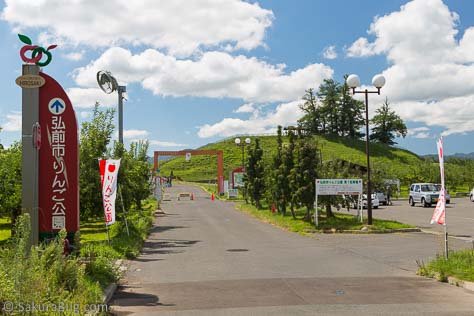
The road leading to the park are small narrow streets, so you do need to keep a lookout for the signboard and turn into the small side street. I missed it the first time and had to drive through a second time.

The Hirosaki Apple Park has a production area of around 2.49 hectares, housing 1,500 apple trees from 80 varieties. At the park, other than apple picking, you can also participate in the apple production experience. The apple production experience can start around May and the actual activities will depend on the production cycle at that time of the year. For apple picking, you will need to be there during the harvest season, which is around Aug to mid-Nov.
In addition, these are some of the festivals that are held at the park. Please do check before you travel as the festivals and timing do change from year to year.
- Hirosaki apple harvest festival (Sep)
- Hirosaki apple flower festival (May)
- Hirosaki apple park winter festival (Jan)

You can take a leisure stroll around the park to look at the different apple trees and enjoy the scenic view with Mt. Iwaki in the background.
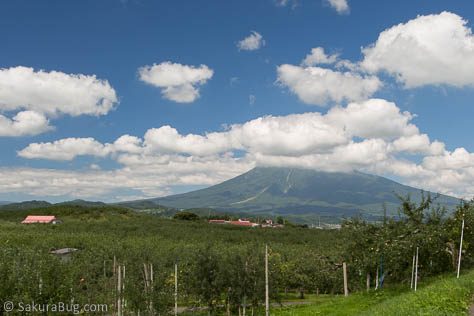
Alternatively, you could rent a bike from the Apple House near the entrance. Or explore the variety of 1,250 apple products within. If you are hungry, there’s a small café as well. Yes, apple ice cream is available at the Apple House!
For those travelling with kids. There are 2 fairly large playground/ picnic areas within the park. You can take a break there while the children have fun with the slides. Do bring along a mat and picnic basket with you for the trip!
Ja
KL