Welcome! If you are planning a self drive trip to Hokkaido, this article is for you!
In an earlier post, I had mentioned that the road system in Japan is right hand drive – driver’s seat is on the right and vehicles keep to the left. And for most countries, you would need to have an IDP (International Driving Permit) to rent a car. You will need to complete this locally in your own country before departing for your free and easy trip.
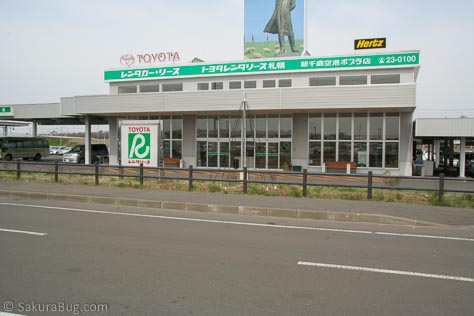
I had also covered renting a car with Toyota Rent a Car in that post. Today we are going to focus on driving to your destination.
Here are some very useful Hokkaido maps that you can use to start planning your itinerary. I also love the one provided by Toyota Rent a Car. However, I have been unable to locate a PDF copy.
- Hokkaido Tourism Organization: Drive Hokkaido (front, back)
- Hokkaido Tourism Organization: Travel Around Hokkaido
- Ministry of Land,Infrastructure, Transport and Tourism Hokkaido Regional Development Bureau: Must-have Handbook for Driving in Hokkaido
Hokkaido is large territory that you would not be able to cover all of Hokkaido within in single trip. Now if you planning to be there for a month, it would be a different story. For your typical one week itinerary, I think you would be need at least 4 self drive trips, roughly covering Southern Hokkaido, Central Hokkaido, Northern Hokkaido and Eastern Hokkaido. If this is your first driving trip, I would suggest that you start with either Central Hokkaido or Southern Hokkaido.
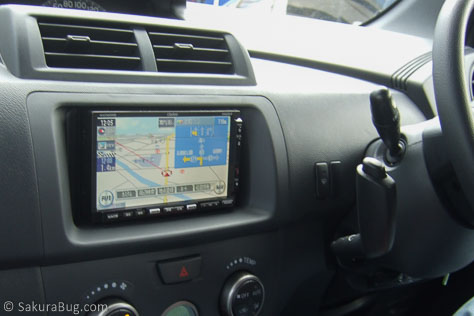
Some of the maps mentioned above do provide a grid of estimated travel times between cities. This would be very useful for your trip planning purposes. Most of the distances are quite far away, do not under estimate the travel time required. Outside the city areas, there are no street lights on the highways nor expressways. So do plan to arrive at your destination before sunset. Do also plan for rest stops and meal breaks. When you are finally on the ground, your trusty on-board GPS will compute an estimated arrival time at the destination.
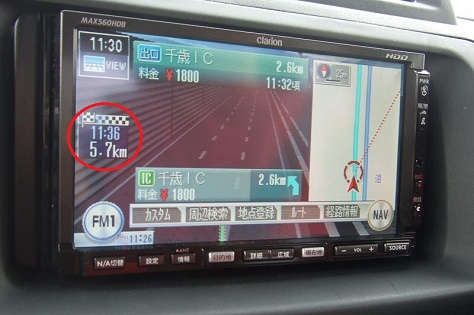
Fortunately, the expressways do cover a large part of Hokkaido. The expressway operator for Hokkaido is the East Nippon Expressway Company Limited, or sometimes abbreviated to East NEXCO. You can find more info on the expressway network here.
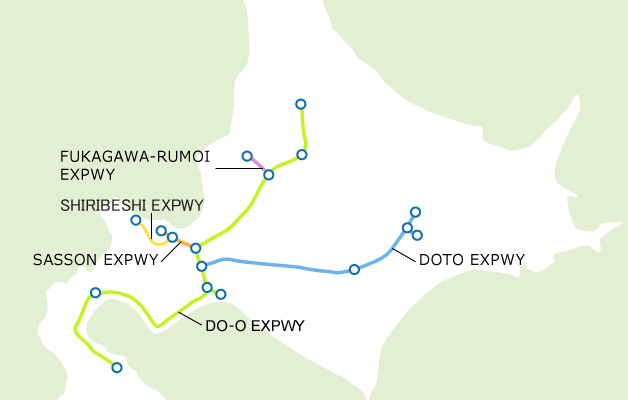
As you can see from the map provided by East NEXCO above, the expressways do cover a big part of Hokkaido especially on the central and southern areas. You will be able to use the expressways most of the time if you are in both these areas. However, you will need to depend on the normal highways for Eastern Hokkaido and also the northern end of Hokkaido.
The GPS system is also smart enough to know when you are on the expressway and it switches to expressway mode navigation. In this mode, the GPS will display the next few exits and the distances to these exits. If the exit includes a rest stop, it will also give you an indication of the facilities there, for example if there is a station at that rest stop.
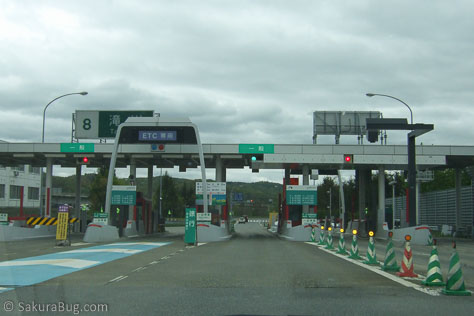
So driving on the expressway is a breeze. However, you will need to pay for using the expressways though. You can choose to pay manually or use the ETC card. Credit cards are generally accepted. However, there are some stretches where it’s just a fixed amount of toll collected at entry.
For foreigners, there is the option of the Hokkaido Expressway Pass which gives you unlimited expressway travel for a fixed fee. You can find out more about using the ETC card and the Hokkaido Expressway Pass here.
If you are planning on covering a large part of Hokkaido with frequently use of the expressways, the Hokkaido Expressway Pass would probably be a good option to consider.
Here are 5 other things to take note of when using the expressways.
1. Number of lanes
The word expressway would probably conjure an image of a wide road with multiple lanes and fast free flowing traffic. That assumption is not correct. On some stretches, the expressway could be just one lane wide. For example, the Doto expressway, which brings you towards the east side of Hokkaido is a single lane expressway. Fortunately, there are over-taking lanes spaced out along the expressway.
2. Merging traffic
In different parts of the world, different traffic rules and etiquette prevail and it is important to follow the local norms. If you have merging traffic coming in from the left, typically entering into the expressway, you should slow down and give way to the incoming traffic.
3. Variable speed limit
The speed limit on the expressway is variable. It depends on road and weather conditions. LED signposts indicate the speed limit along that stretch of road. If there signposts are off or if there are no signboards, the maximum speed limit along the expressway is 100 km/h.
4. Cross winds
If you slow down to appreciate the construction of the expressways, you will find it an engineering marvel. It cuts through the mountainous valleys providing an elevated pathway for motor vehicles. It is also likely along these elevated sections that you would encounter strong cross winds. Do keep an eye out for signs indicating that you are in a windy area and keep both hands on the steering wheel.
5. Driving fatigue
Driving distance can be long and monotonous on some stretches. You do want to be alert driving at high speed along the expressway. So do make a rest stop every couple of hours, stretch yourself and get a cup of coffee. What you probably want to look for are SAs (Service Area), which usually have snack corners, food court dining area, gift shop, petrol station, parking spaces and toilets. You can check out E-NEXCO’s Drive Plaza site for info on these SAs.
These SAs are also known as Michi-no-Eki (道の駅). You can locate more info at the All Nippon Michi-no-Eki Network. Some of these SAs can be very popular or elaborate. Popular as it may offer something unique like local produce. Elaborate as some could contain a shopping center, restaurants, lodging or even a pet run area. Touring some of these SAs can be a discovery adventure in itself.
That’s all for today, are you ready for some driving in Hokkaido?
Ja
KL