One of the destinations that I tend to include in every free and easy trip would be a stop at a farm. I guess this is part my interest to get back to nature, to be able to pluck and taste fruit that has ripen naturally with the full sweetness of the fruit. This time round, I included a visit to Aritakyohomura Mori Orchards (巨峰村森園, tel: 0737-32-3843, 〒643-0313和歌山県有田郡有田川町川口1054-24) as part of my Wakayama self drive itinerary.
Aritakyohomura Mori Orchards is located in the Arida district or Arida-gun (有田郡) in the Wakayama prefecture.
Arida-gun is probably more well known as a farming area as the 2 main industries there are agriculture and forestry. The farms located deeper inland and away from the Wakayama coast. At the Arida Komine village, there are 20+ farms occupying about 40 hectares of farmland. This area is famous for its mandarin oranges or mikan (有田みかん). Other fruits cultivated here include the grape, peach and pear.
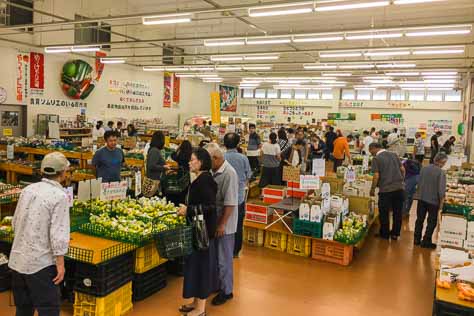
As you drive inland from the Wakayama coast, you will reach the JA Arida Farmers’ Market first, which is a short distance away from the expressway junction. Inside the market, which really is a small building, are various local produce on sale from different farmers.
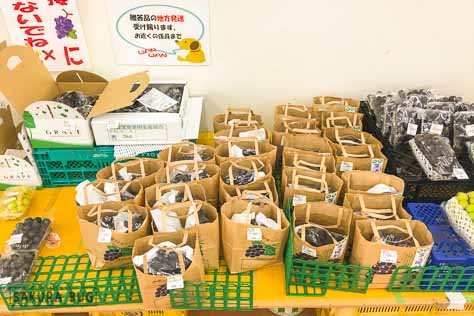
JA Arida Farmers’ MarketGrapes on sale
As you approach Morien, you will see a small hut with some senior ladies manning the hut. They are helping to guide visitors to the various farms in this area. From this point onwards, there are coloured lane markings on the road – blue, yellow and red. You will be able follow the coloured line marking to reach the farm you are heading to. Morien is easy, the nearest from the hut, just a very short distance from this hut.
Direction arrows at Arida Komine Village
At the entrance on the right, there is a small counter under a white tent serving as a registration desk. Upon registration and payment, you would be issued a basket and a pair of scissors. Just behind the registration desk is a shed where the farm produce is being sold. On the left is a big resting area, where you can rest and relax.
Registration counterResting area
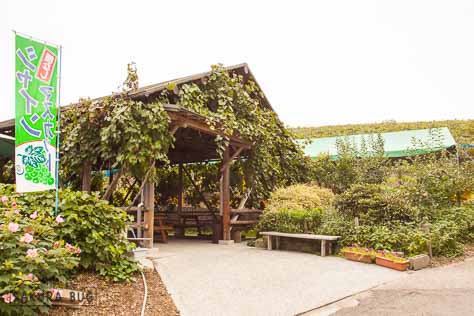
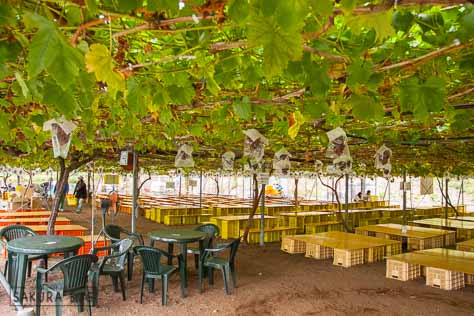
Immediately on the path behind the registration area, you will find a grape orchard with a sitting area. There are around 10 kinds of grapes grown in Morien.
Grape orchard with sitting areaGrapes in the orchards
You will also find mikan, pear and persimmons grown here.
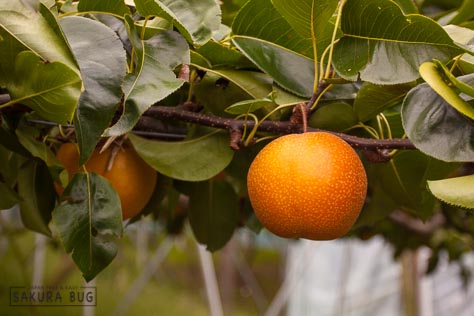
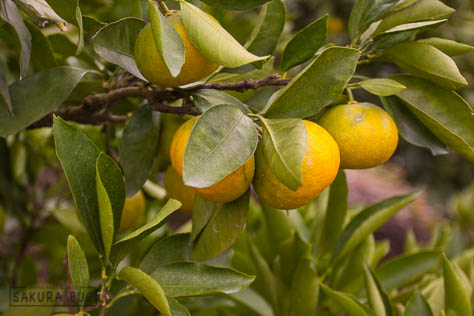
PearPersimmonsMikan (Mandarin Oranges)
And yes, I also found this little truck with it’s top chopped off. I was wondering if it was an abandoned truck but realized it had been adapted for use in the fruit orchards.
Adapted truck
Hope that you will have fun strolling in Morien too!
One of the activities that I had always been looking forward to is to go fruit picking at a fruit farm. However, I never seem to be able to get this into the itinerary. So, when I was in Aomori for a free and easy trip, I put in both the visit to the Hirosaki Apple Park and to Morino Nakano Kajuen (森の中の果樹園, 080-1821-3059).
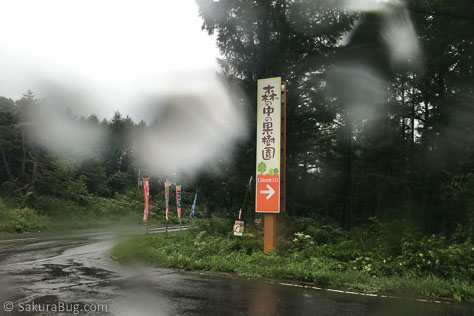
Morino Nakano Fruit Farm is located within Hirosaki in the Aomori prefecture. It is quite a short drive north, around 30 minutes, from the Hirosaki city area. You would be driving along Route 30 heading north, in the general direction of Mt. Iwaki. From Route 30, you will be making a right turn into a side road leading to the fruit farm. There are signboards near to and at the right turn.
Signboard to Morino Nakano Fruit Farm along Route 30Signboard to Morino Nakano Fruit Farm along side road off Route 30
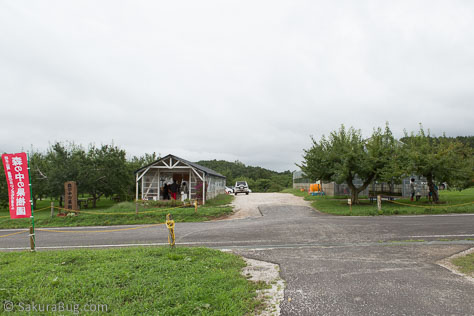
It was a cloudy morning with some drizzle as I drove to the fruit farm. It took me a while to find the find the farm as I was looking for a farm building and a demarcated parking area. The “building” was more of a shed with a small signboard in front. You can park your car around the grass patch just behind the shed. Yes, free parking.
Entrance of Morino Nakano Fruit FarmMap of Morino Nakano Fruit Farm
Once you have parked, you can make your way to the shed. This is where you will buy your ticket, which costs 1,200 (yen) during the off-peak season and 1,500 (yen) during the peak season for an adult ticket. You will be issued with a basket and a pair of scissors. You can also get a pair of boots plus an umbrella here if you need them. This ticket allows you to pick as much fruit as you can eat on the spot plus a small quantity to take away.
As you were passed the basket and scissors, you would have been briefed to only pick fruits from the trees with a pink ribbon. And off you go to the fruit orchards to pick the fruits.
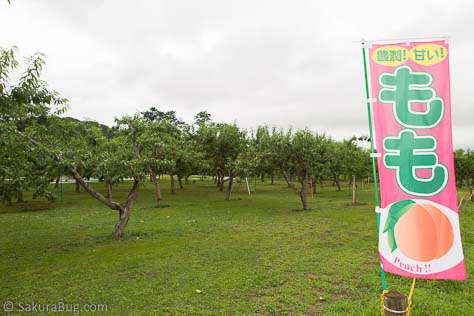
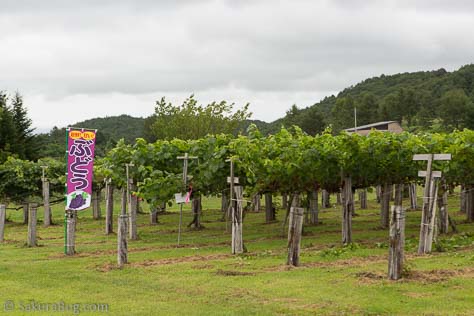
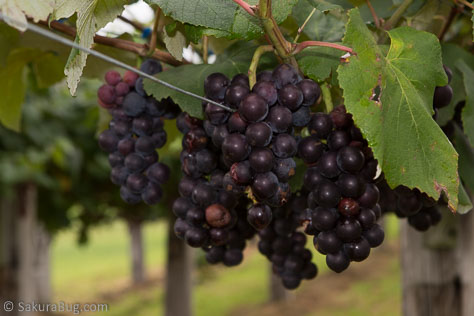
Peach plantation at Morino Nakano Fruit FarmPeach tree at Morino Nakano Fruit FarmGrape plantation at Morino Nakano Fruit FarmGrapes at Morino Nakano Fruit Farm
I had a great time roaming through the different fruit orchards. I had my pick of different varieties of peaches, grapes, prunes and plumes, Pity there weren’t any strawberries. I guess I need to visit again during a different season.
Japan is made up of four main islands, Honshu, Kyushu (九州) and Shikoku and Hokkaido. Today, we will be going on a free and easy trip around Fukuoka (福岡) located in Kyushu. The city of Fukuoka is also known as Hakata.
For this self drive trip, I took roughly a circular route starting from Fukuoka, then headed south to Kumamoto. Next on the destination was the Aso area before taking the Yamanami scenic route to Oita/Beppu. On the way back to Fukuoka, I also made a detour to the Tosu factory outlet (Premium outlets) for some shopping.
Fukuoka became the staging point for me in this free and easy journey. Our very first stop was the Aeon Mall in Fukuoka to stock up on supplies plus dinner in the shopping complex. Then it was time to get some rest at the hotel before taking the drive south to Kumamoto the next morning.
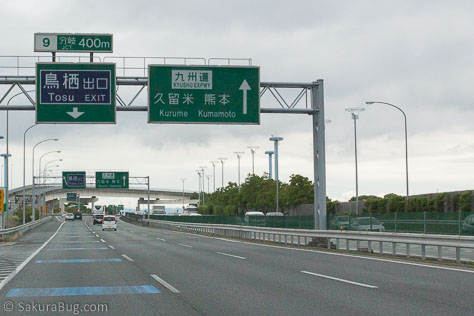
Kyushu Expressway to Kumamoto
1. Kumamoto city and Kumamoto Castle
Kumamoto is located roughly in the centre of Kyushu. It is a major city with a population of around 750,000. It is also called a “City of Forests” since green forests cover about 60% of the entire prefecture.
It also houses one of the largest-scale shopping arcade in Japan. The arcade is in the city centre, housing a huge variety of shops. We stayed in the city area and was able to walk around town and explore the shopping arcade.
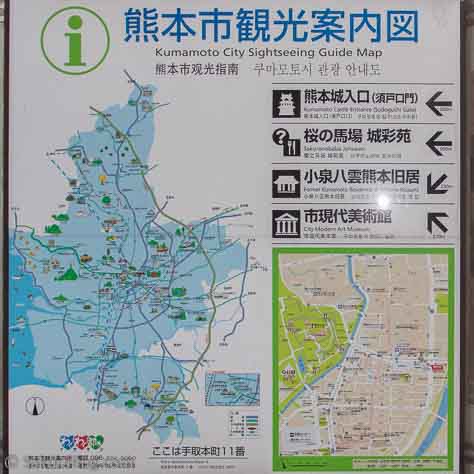
Kumamoto City Map
Kumamoto Castle (熊本城), one of the great castles in Japan, is a big tourist magnet located in centre of the city area. Unfortunately, there was heavy damage to the castle in the April 2016 earthquake and it is now closed to the public.
2. Fruit picking in Kumamoto fruit farms
Kumamoto is also known as the land of fruits. There are various farms which you could visit for fruit picking. Kichijien (吉次園, Tel: 096-273-2544) is one of the tourist farms which you can visit. It is located in the more remote farm areas quite a distance away from the city. You will need a rental car to get there.
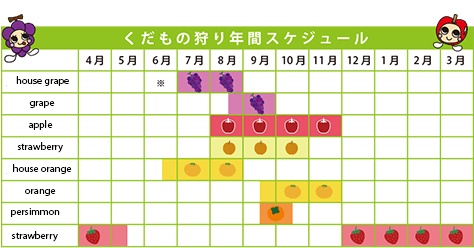
Do take note of the fruit picking season. While they are open most of the year, June is when it is closed to visitors.
Kichijien fruit picking schedule from their website with added English overlay
3. Aso Farm Land
Next on the route was Aso Farm Land (阿蘇ファームランド, Tel: 0967-67-2100). This is a rather interesting and unique place, which combines Experience, Sports, Healing, Gourmet, Stay and Shopping in one huge expansive location. There is some impact from the April 2016 earthquake and the resort will be reopened in August 2016.
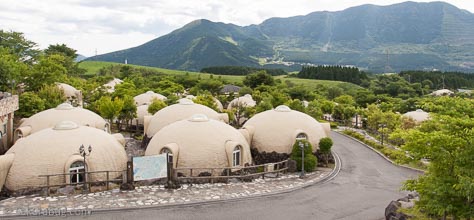
One of the things that catches your eye would be the unique accommodation facilities. There are a few clusters of dome huts very much like igloos against the Aso mountain range backdrop. These are the hotel rooms that you will be staying in. This would be the “Stay” zone.
Dome huts in Aso Farm Land
Hot springs can be found in the “Healing” zone. There are different options available, such as the open air spa, hot spring with scenic view, the mineral water bath and the herbal water bath.
There are different sporting activities available in the “Sports” zone which is in the Forest Vitality area. There are different interactive equipment here to get a fun workout in a nature setting.
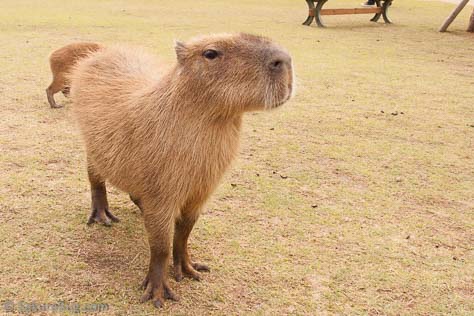
In the “Experience” zone, you will be able to get close up to some farm animals. There is also a feeding area where some animals are roaming around. You can buy animal feed from a dispenser and have fun feeding these animals in the enclosure.
Animal enclosure in Aso Farm Land
4. Mount Aso
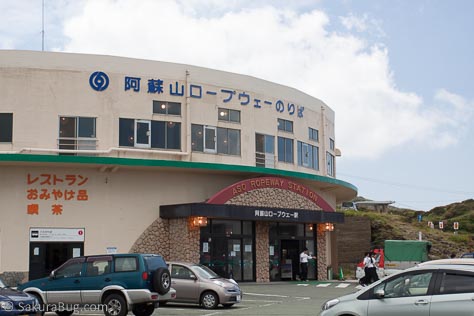
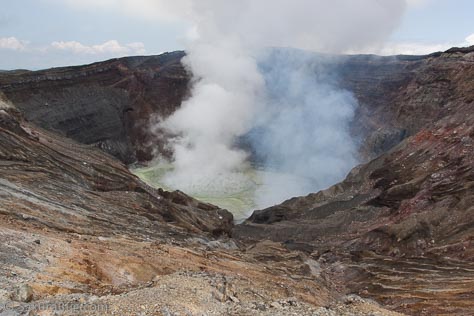
Near to Aso Farm Land is Mt. Aso. (阿蘇山), located within the Aso-Kuju National Park. It is an active volcano with a massive caldera housing a range of five peaks including Mt. Nakadake and its crater.
5. Yamanami scenic route and Kokonoe Yume Suspension Bridge
The Yamanami Highway or Route 11 in the maps takes you through the rolling, grass covered hills of Kyushu. It roughly stretches from Beppu City/Oita to Aso City/Kumamoto. It is a popular drive with many great hot spring spots along the way. There are also many scenic viewing spots as well as trails for hiking and walking.
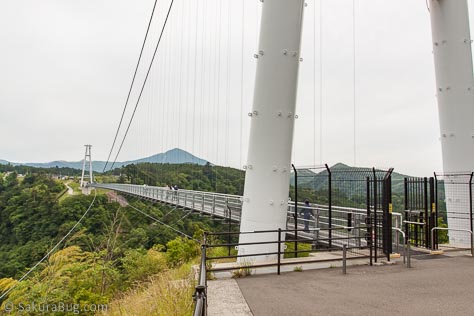
One of the key attractions along the route is the Kokonoe Yume Suspension Bridge (九重”夢”大吊橋, Tel: 0973-73-3800). Standing at 173m tall and spanning 390m long, it is the highest pedestrian walkway bridge in Japan. From the bridge, you would be able to see Shindonotaki falls (震動の滝), which is among the top 100 waterfalls in Japan.
Kokonoe Yume Suspension Bridge
6. Chojabaru Visitor Centre
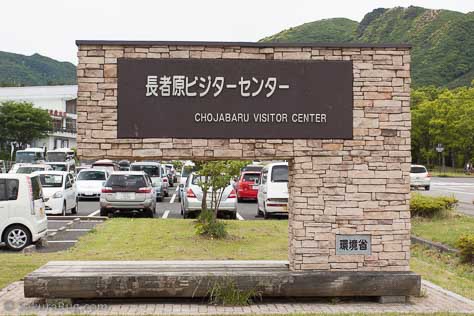
Another place to visit along the Yamanami Highway would be the Chojabaru Visitor Centre (Tel: 0973-79-2154) which is within the Aso Kuju National Park, midway between Aso and Yufuin. From the Visitor Centre, you will be able to catch of view of the Mt Io and the three domed Mt. Mimata.
Chojabaru Visitor Centre
The key feature would be the Tadawara Marsh on the north west side of the Kuju mountain range. It is a basin shaped wetland caused by historical volcanic activity. There are 3 walking courses to choose from, the Marsh Boardwalk, the Marsh and Grassland trail and the Forest trail. The shortest course would be the Marsh Boardwalk, taking about 20 to 30 minutes at a very leisurely pace. The entrance to the boardwalk is near to the Visitor Centre.
7. Mt. Takasaki Wild Monkey Park
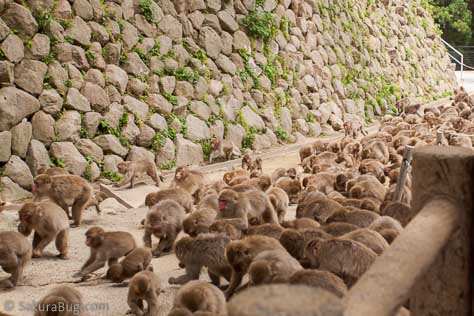
As we continue driving east, we reached Oita (大分), which is where the Mt. Takasaki Wild Monkey Park (高崎山自然動物園, Tel: 097-532-5010) is located. It is a monkey reserve at the base of Mount Takasaki, housing around 1400 wild monkeys that roam freely on the mountain slopes. Yes, these are wild monkey and visitors must keep their distance, neither tease nor feed them and not to look them in the eye.
The park was opened as a way to solve the human-monkey conflict. These monkeys are feed regularly so that not encroach into residential areas nor farming areas. You can see the huge hordes of monkeys running for the food when it’s feeding time.
Monkeys feeding at Mt. Takasaki
With that, we headed back to Fukuoka, but made a detour to Tosu, location of the nearest Premium Outlets.